The selection of water supply pipes should not be based solely on pipe diameter and price.
For a practical water supply project, it is necessary to consider water flow rate, operating pressure, pipe length, installation environment, soil corrosiveness, connection methods, design life, as well as transportation and construction conditions.
For large-diameter, long-distance water conveyance projects, steel pipes offer high strength, a wide range of specifications, and suitability for high water flow capacities; therefore, they are widely used in urban water supply, raw water conveyance, water treatment plant infrastructure, and large-scale infrastructure projects.
We hope that the information below will help project procurement and engineering personnel make quicker decisions regarding the type of steel pipe required, the parameters to focus on, and the key points to verify during the procurement process.
I. First, Determine the Required Pipe Diameter
Pipe diameter is primarily determined by the project’s design flow rate and allowable flow velocity; it is not simply a matter of “the larger the diameter, the better.”
For the same water delivery volume:
- A smaller pipe diameter may result in higher flow velocity and increased frictional losses;
- A larger pipe diameter can reduce flow velocity and some head loss, but material and construction costs will also increase.
Therefore, the pipe diameter is typically determined by considering hydraulic calculations, design flow rate, operating pressure, and the project’s overall cost.
If you already have a design flow rate or pipe diameter requirements provided by the design firm, you can procure the pipes directly according to the project specifications.
If the project is still in the conceptual design phase, it is recommended to first determine:
- Design flow rate → Pipe diameter → Operating pressure → Wall thickness → Corrosion protection scheme
rather than deciding on steel pipe specifications based on market prices first.
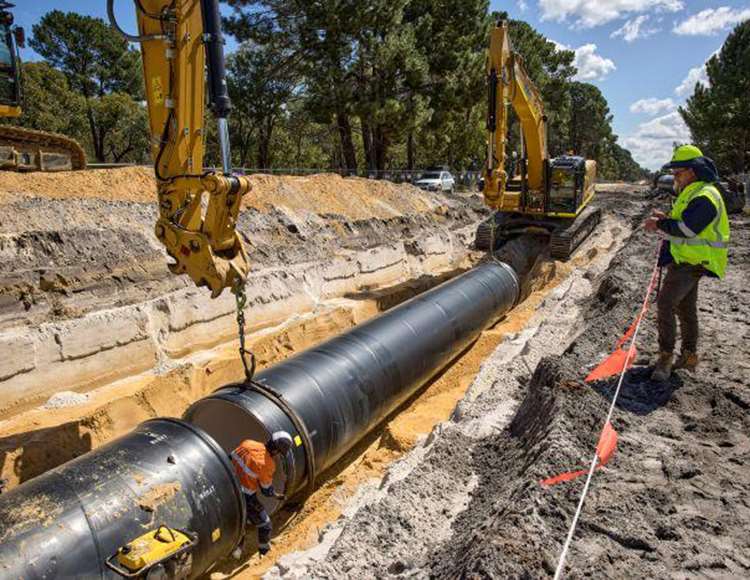
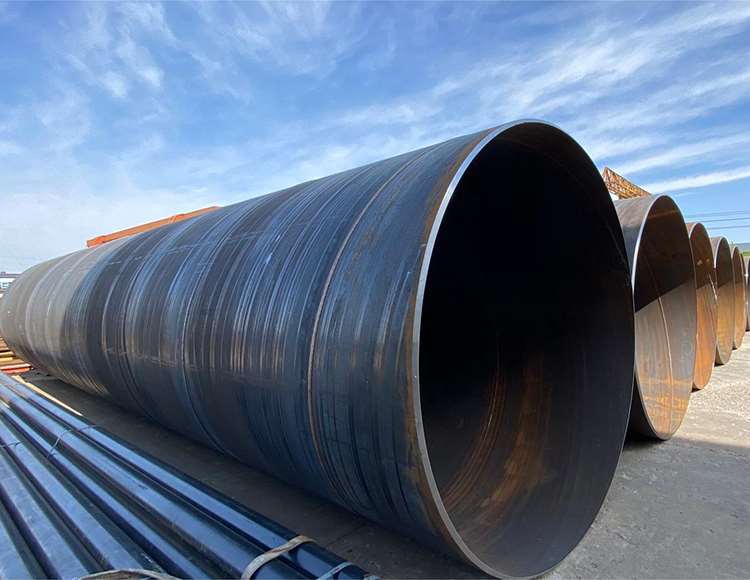
II. SSAW vs. LSAW: Which Should Be Chosen for Water Supply Projects?
In large-diameter water supply projects, both SSAW (spiral submerged-arc welded steel pipes) and LSAW (longitudinally submerged-arc welded steel pipes) may be used.
1. SSAW Spiral Steel Pipe
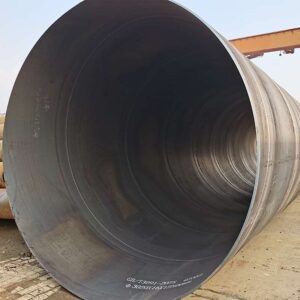
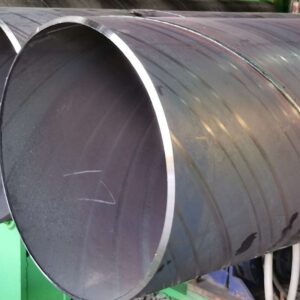
SSAW steel pipes are manufactured using a spiral-formed welding process, offering a wide range of sizes and good production flexibility.
SSAW pipes can be considered for the following projects:
- Large-diameter water transmission
- Long-distance water transmission
- Urban water supply trunk lines
- Raw water transmission
- Industrial water supply
- Large-scale infrastructure pipelines
Whether SSAW is suitable should ultimately be determined based on the project design standards, pressure rating, and technical specifications.
2. LSAW Steel Pipe
LSAW steel pipes are manufactured using the straight-seam submerged-arc welding process and are typically used in projects with specific requirements regarding pipe dimensions, steel grades, and technical specifications.
Therefore, the choice between SSAW and LSAW should not be simply viewed as a matter of “which is better,” but rather should be based on:
Project standards + Pipe diameter + Wall thickness + Pressure + Design requirements + Procurement cost
III. How Should Wall Thickness Be Determined?
Wall thickness cannot be determined solely based on pipe diameter.
It is typically related to the following factors:
- Design pressure
- Pipe diameter
- Steel grade
- Pipe installation method
- Burial depth
- External loads
- Water hammer effects
- Corrosion allowance
- Design standards
For example, even for large-diameter water transmission pipelines, the stress conditions may differ between above-ground installation, shallow burial, and deep burial; therefore, the required wall thickness in millimeters cannot be determined based solely on the pipe diameter.
If you already have a project technical specification, we recommend determining the wall thickness according to the design requirements.
If you only have the pipe diameter and flow rate, but lack a complete technical specification, we recommend first confirming the design pressure and installation conditions before determining the wall thickness, rather than quoting directly based on experience.
IV. Why Do Water Supply Steel Pipes Need Corrosion Protection?
Steel pipes inherently possess good structural strength, but when exposed to underground, damp soil, or aquatic environments over long periods, corrosion can shorten the service life of the pipes.
Therefore, for buried water supply steel pipes, external corrosion protection is typically a key factor to verify during procurement.
Common solutions include:
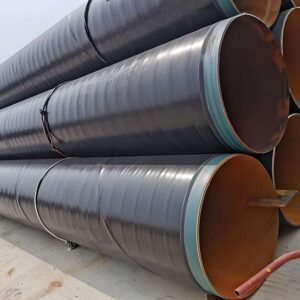
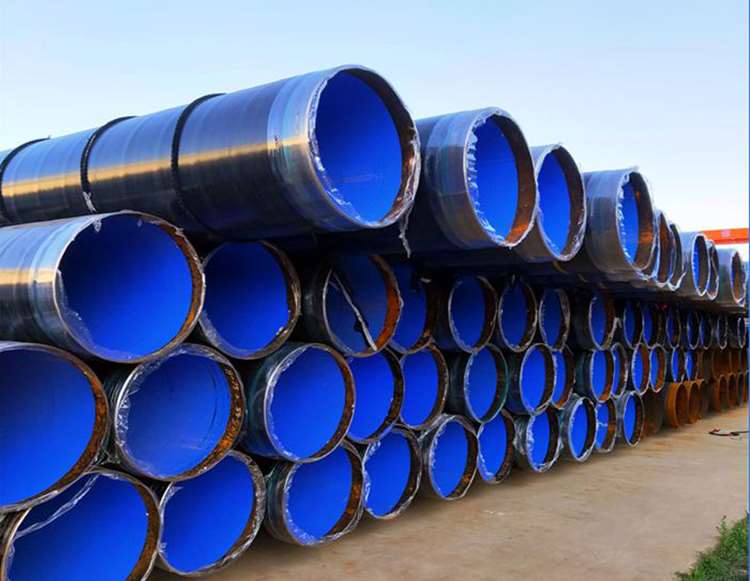
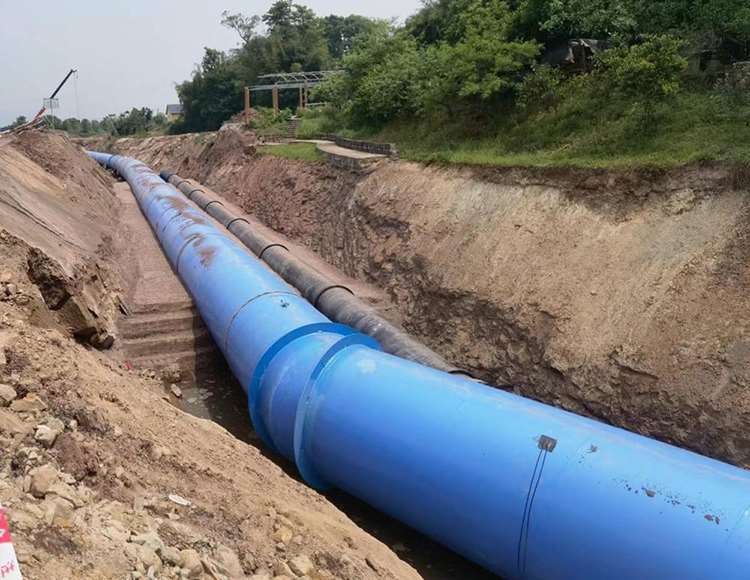
- 3PE Coating
- 3PE typically consists of:
- an FBE primer + an adhesive + a polyethylene outer layer.
It is characterized by a balance of corrosion resistance and mechanical protection, and is commonly used for buried water supply and long-distance transmission pipelines.
FBE Coating
FBE is a fusion-bonded epoxy powder coating that offers excellent adhesion and corrosion resistance.
It is suitable for projects with specific requirements regarding coating systems, application conditions, or project standards.
The choice between 3PE and FBE is not simply a matter of “which is better.”
The decision should be based on:
Soil conditions + installation method + risk of mechanical damage + design life + project standards.
V. Why Do Pipe Ends Need to Be Confirmed in Advance?
Since on-site welded connections are widely used for water supply steel pipes, the type of pipe end directly affects construction.
It is recommended to confirm the following in advance during procurement:
- Plain End or Beveled End
- Bevel angle
- Blunt edge dimensions
- Whether the pipe ends require corrosion protection
- How much clearance should be left between the coating and the pipe end
- Whether on-site welding is required
This is particularly important for steel pipes that have already undergone 3PE or FBE corrosion protection, as the coating treatment on the pipe ends must be coordinated with on-site welding requirements.
If the pipe ends are fully coated, they may need to be re-treated during on-site welding; therefore, pipe end requirements should be clarified during the procurement phase rather than addressed after delivery.
VI. 10 Things to Check When Purchasing Water Supply Steel Pipes
If you are preparing a request for quotation or a purchase order, you may want to gather the following information first:
- 1. Outer Diameter e.g., DN800 / OD813 mm
- 2. Wall Thickness e.g., 10 mm / 12 mm / 16 mm
- 3. Steel Grade e.g., Q235B, Q355B, API 5L B, X42, etc.
- 4. Length Fixed length or range
- 5. Quantity Meters, number of pieces, or weight
- 6. Applicable Standards Production and inspection standards specified by the project
- 7. Corrosion Protection 3PE, FBE, or other systems
- 8. Coating Thickness Determined based on project requirements
- 9. Pipe Ends Flat ends, beveled ends, etc.
- 10. Delivery Location Used to confirm transportation and packaging plans
The more complete this information is, the easier it will be for suppliers to provide accurate and comparable quotes.
VII. Don’t Just Compare the Price per Metric Ton of Steel Pipes
When procuring for water supply projects, comparing only “USD/MT” does not necessarily provide an accurate assessment of the final cost.
You should also compare:
- Steel pipe price + corrosion protection cost + pipe end processing + inspection fees + packaging + transportation + on-site construction impacts
For example:
Two suppliers may offer steel pipes with the same outer diameter, but if:
- the wall thickness differs;
- the steel grade differs;
- the coating thickness differs;
- the end-processing requirements differ;
- the scope of inspection differs;
then simply comparing the price per metric ton may not be meaningful.
Therefore, it is recommended to request quotes from different suppliers using the same technical specifications and delivery terms during the procurement process; only then will the quotes be comparable.
VIII. Which Water Supply Projects Are Suitable for Steel Pipes?
1. Urban Water Supply
- Used for urban main transmission lines, main water supply pipelines, and large-scale municipal projects.
2. Long-Distance Water Transmission
- Used for long-distance water transmission from water sources to water treatment plants, from water treatment plants to cities, or between different regions.
3. Raw Water Conveyance
- Used for raw water conveyance pipelines between reservoirs, water sources, and water treatment plants.
4. Industrial Water Supply
- Used in water supply systems for industrial parks, factories, and large-scale production facilities.
5. Agriculture and Irrigation
- Used in large-scale agricultural irrigation and water resource conveyance projects.
6. Water Treatment Plant Piping Systems
- Used for water intake, effluent discharge, and large-scale water transmission pipelines within water treatment plant premises.
IX. What Should a Complete Request for Quotation for Water Supply Steel Pipes Include?
- Application: Water Supply Pipeline
- Pipe Type: SSAW Steel Pipe
- Outside Diameter: 813 mm
- Wall Thickness: 12 mm
- Steel Grade: Q235B
- Length: 12 m
- Quantity: 5,000 m
- Coating: 3PE
- Coating Thickness: According to project specification
- Pipe Ends: Beveled Ends
- Standard: According to project specification
- Delivery: [Destination]