When procuring industrial piping for large-diameter, high-pressure transmission projects, two abbreviations are frequently encountered: one is spiral-welded steel pipe (also known as SSAW), and the other is LSAW steel pipe (longitudinally submerged arc-welded steel pipe).
Although both are welded pipes produced using the submerged arc welding process, their differing “manufacturing methods” result in significant differences in performance, price, and application scenarios. Many project managers find themselves confused when selecting the right type: Which pipe is actually better suited for my project? Choosing an overly expensive option wastes the budget, while choosing the wrong one compromises project safety.
In this article, we’ll clarify the differences between these two types of pipes to help you make an informed purchasing decision.
I. How Are They Made?
- Spiral Welded Steel Pipe (SSAW)
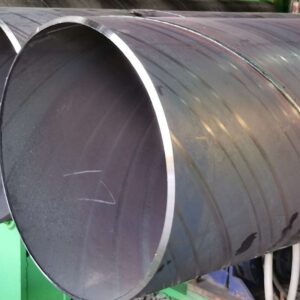
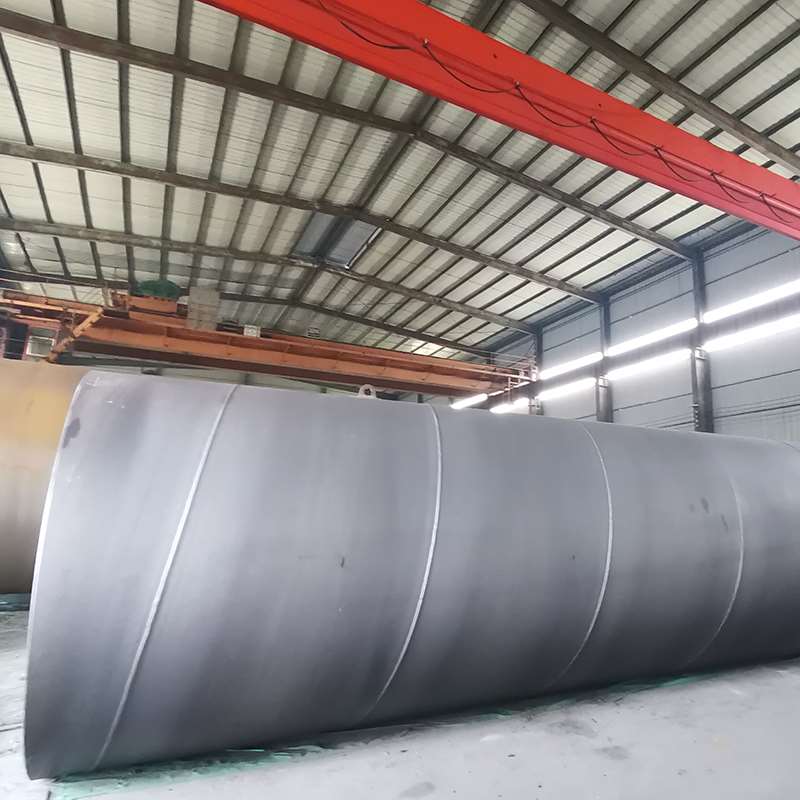
- This process uses coiled steel strips (coiled sheet) as raw material. A forming machine winds the steel strip diagonally (at a specific spiral angle) like a paper roll to form a pipe, and then welds the resulting spiral seam shut.
- Features: It can use relatively narrow steel strips to produce large-diameter steel pipes by adjusting the winding angle. The production process is continuous and highly efficient.
- LSAW Steel Pipes (Longitudinal Submerged Arc Welded Pipes)
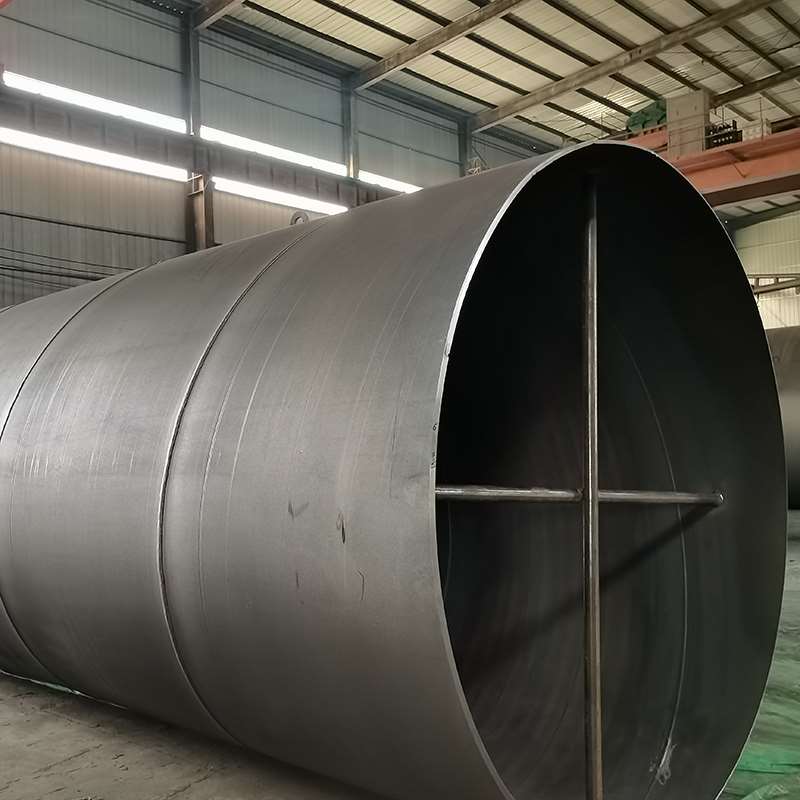
- These are made from individual steel plates of uniform width and thickness. A single steel plate is placed in a massive press and formed into a J-shape, O-shape, E-shape, or U-shape (i.e., folding both sides of the entire plate inward to form a cylinder), after which the straight seam in the middle is welded shut.
- Characteristics: Each pipe is made from a single steel plate, so continuous production is not possible. Because straight-seam pipes typically undergo “mechanical expansion” (where the pipe is gently stretched outward to make it rounder and more dimensionally accurate) after rolling, their wall thickness and roundness are controlled with exceptional precision.
II. What are their respective advantages and disadvantages?
1. Pressure Resistance and Safety Performance: LSAW has the edge
- Longitudinal Seam Welded (LSAW) pipes are safer: Their weld seam is a straight line, and this line runs parallel to the primary direction of stress in the pipe. More importantly, LSAW steel pipes are made from medium- to thick-gauge plates, which offer better overall quality and uniformity than the coiled strips used for spiral-welded pipes. Because they undergo mechanical expansion, the “internal stress” (the force caused by the material resisting itself) inside the pipe is minimal.
- The Achilles’ heel of spiral-welded (SSAW) pipes: Their weld seam forms a long spiral line. Pressure inside the pipe tends to expand outward in all directions, causing the spiral weld seam to endure greater tensile stress than that of straight-seam pipes. Furthermore, since spiral pipes are not expanded during production, they have relatively high internal stresses. If the steel strip itself has quality defects, the spiral seam is more prone to tearing under high pressure over long distances.
2. Dimensions and Specification Ranges: Each Has Its Own Advantages
- Wall Thickness (LSAW Advantage): Longitudinal seam LSAW pipes can be rolled from extremely thick steel plates, with wall thicknesses reaching 40 millimeters or even 60 millimeters and above. In contrast, spiral-welded pipes are limited by the thickness of the steel strip and the machine’s rolling capacity, making it difficult to achieve extremely thick walls; the mainstream range is generally below 25 millimeters.
- Length and Diameter (Spiral has the advantage): Spiral-welded pipes are produced continuously, so they can be cut to any length desired (typically limited by transportation, usually around 12 meters). Furthermore, a single narrow steel strip can be used to produce large pipes with diameters of 2 meters or 3 meters. Longitudinal-seam pipes are limited by the dimensions of a single steel plate; while larger diameters are possible, extremely large diameters may require welding two plates together, resulting in an additional weld seam.
3. Price and Lead Time: Spiral (SSAW) Wins Hands Down
- Spiral pipes are cheaper: The raw material—coiled strip—is less expensive than the single sheets of medium-to-heavy-gauge plate used in LSAW; production is fast—once the machines are running, they churn out pipes like dumplings—and labor and processing costs are low. For the same diameter and material grade, the price per metric ton of spiral pipes is significantly lower than that of straight-seam LSAW pipes.
- Spiral-welded pipes offer fast delivery: If you need the goods urgently, the production cycle for large batches of spiral-welded pipes is very short. In contrast, the LSAW process is complex, involves many steps, and is slow.
III. Comparison Guide: Which Category Does Your Project Fall Into?
Now that we understand the pros and cons, let’s identify which category applies to your project. When selecting equipment, the goal isn’t to buy the best, but to buy what’s most suitable.
| Project Type | Recommended Pipe | Why? |
|---|---|---|
| Municipal water supply, sewage, and agricultural irrigation | SSAW steel pipe | These projects typically operate at relatively low internal pressures (generally from a few bar to around 10–20 bar). SSAW pipes can meet the requirements in many such applications while helping reduce material and procurement costs. |
| High-pressure natural gas and long-distance oil transportation | LSAW steel pipe | Oil and gas pipelines are high-risk, high-pressure applications, with operating pressures that can reach tens or even over 100 bar depending on the system. Leakage can have serious consequences. Applicable international and national standards, such as API 5L, specify requirements for pipe manufacturing, grades, and performance for oil and gas transmission pipelines. LSAW pipes are commonly selected for large-diameter, high-pressure applications. |
| High-rise building piling and bridge structural supports | Depends on the application: SSAW for large diameters; LSAW for critical heavy-load applications | For many general piling applications and marine piles, SSAW pipes can provide a cost-effective solution. For critical load-bearing columns in high-rise foundations or key structural members of bridges, where dimensional accuracy, strength, and structural performance are more demanding, LSAW pipes may be considered. |
| Power plant circulating water and low-pressure chemical pipelines | SSAW steel pipe | These are industrial piping applications where operating pressure can generally be controlled. SSAW pipes can offer a cost-effective option, allowing more of the project budget to be allocated to corrosion protection, such as 3PE external coating or internal lining. |
IV. 4 Practical Tips for Procurement Managers When Selecting Pipes
If you are a procurement manager responsible for spending, when faced with choosing between these two types of pipes, we recommend weighing your decision based on the following practical benefits:
1. Calculate the total price per metric ton; don’t just look at the unit price
- Straight-seam LSAW pipes have a higher unit price, but because they are typically made of higher-grade steel, design firms sometimes specify a slightly thinner wall thickness; Spiral-welded pipes have a lower unit price, but to play it safe, design institutes may increase the wall thickness by 1–2 millimeters.
- Procurement Tip: Ask suppliers to provide total prices for both pipe types based on the corresponding specifications provided by the design institute. You may find that although the unit price of straight-seam pipes is higher, the total price difference isn’t as significant as you might expect because the total tonnage is lower.
2. Consider On-Site Welding Costs
- Straight-seam LSAW pipes undergo mechanical expansion, resulting in a perfectly round profile. When joining two pipes on-site, alignment is very easy, and welders can work quickly. In contrast, spiral-welded pipes may exhibit slight ovality or warping, making on-site alignment more difficult and increasing welders’ labor costs.
3. Consider the Cost of Corrosion Protection
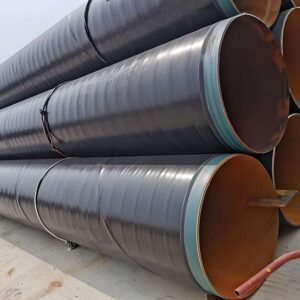
- Large-diameter pipelines generally require 3PE corrosion protection on the outer wall or epoxy coating on the inner wall. Spiral-welded pipes have raised spiral weld seams on their surfaces, which can lead to uneven coating thickness at the welds during application; straight-seam pipes have a smooth surface, resulting in better corrosion protection and making it easier to meet quality standards.
4. Verify the Manufacturer’s Qualifications
- Regardless of the type of pipe you purchase, because the entry barriers for spiral-welded pipes are relatively low, there are many small workshops on the market. When purchasing, be sure to verify whether the manufacturer holds a Special Equipment Manufacturing License (Pressure Pipeline Components) and has passed API 5L certification.
- If purchasing spiral-welded pipes, you must require the manufacturer to provide a 100% non-destructive testing (X-ray or ultrasonic) report, as porosity or slag inclusions in the welds are the most critical issues for spiral-welded pipes.