Spiral-welded steel pipes are produced by rolling steel strips into a tubular shape and then welding them. Compared to other types of steel pipes, they allow for the production of large-diameter pipes using narrower steel strips, making them widely used in water supply, oil and gas transportation, and pile foundation engineering.
However, during the actual procurement process, many procurement professionals face a common challenge: What pipe diameter should be selected? What wall thickness is appropriate? What are the differences between various steel grades and corrosion protection methods?
If the selection is inappropriate, it will not only compromise project safety but may also increase unnecessary procurement costs. So, how should one select the appropriate specifications for spiral welded steel pipes based on project requirements?
I. How to Choose the Diameter?
The diameter of a steel pipe determines its flow capacity. In common water supply and sewage projects, the selection of diameter primarily depends on two factors:
1. The water flow velocity should be neither too fast nor too slow
If the pipe diameter is too small, the water flow velocity will have to increase significantly to allow enough water to pass through.
This leads to two problems:
- First, the friction of the water inside the pipe is too high, causing the pumps to consume excessive electricity later on;
- Second, the water flows too forcefully; if a valve is closed suddenly, the impact against the pipe walls can easily cause the pipe to crack.
- Conversely, if the diameter is too large, the water flows too slowly. While this saves on electricity costs, the cost of purchasing larger pipes and the labor costs for digging wider trenches will exceed the budget.
2. Industry Best Practices
Engineers generally follow these industry best practices when selecting pipe diameters:
- For gravity-fed water (flowing by natural elevation differences without pressure): Keep the flow velocity within the range of 0.6 to 1.2 meters per second.
- For water pumped uphill under pressure: The flow velocity is generally between 1.0 and 2.0 meters per second.
- Natural gas pipelines: The flow rate is faster, generally ranging from 4 to 15 meters per second.
- Purchasing Tip: Simply tell the technical staff how many metric tons of water the project needs to handle per day. They can then refer to the flow rates listed above to immediately calculate the required pipe diameter and place an order directly based on the dimensions specified in national standards.
II. How to Choose the Wall Thickness?
The wall thickness is the “framework” of a pipe; if it’s too thin, problems are likely to arise.
1. Internal Pressure: Preventing Bursting
- Water or gas flows through the pipe, creating pressure. The higher the pressure, the thicker the wall must be.
- In this case, the steel grade also matters. If you choose a high-grade steel (such as API 5L X60), which has excellent mechanical properties and high strength, the wall thickness can be made slightly thinner; if you choose standard steel (such as Q235B), the wall must be thicker to withstand the pressure.
2. External Pressure: Preventing Crushing
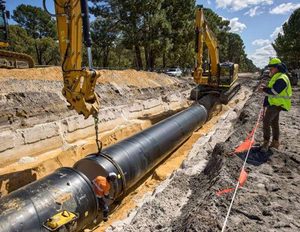
- Pipes are buried underground, covered by several meters of soil, and must withstand the weight of heavy trucks passing over them. If a pipe has a large diameter but an extremely thin wall, draining the water inside for maintenance can cause the surrounding soil and groundwater to exert pressure, instantly “sucking in” or “flattening” the pipe. Once the internal anti-corrosion coating peels off, the pipe will quickly deteriorate.
- Therefore, pipes buried at great depths or crossing roads must have thicker walls.
III. Major Manufacturing No-No: Pipes Must Not Be Made “Too Thin”
- To save money, many buyers tell manufacturers, “Make the diameter larger and the wall thickness thinner—that way, the weight per metric ton will be lower, and we’ll save money.”
- Unfortunately, manufacturers simply cannot do that. This is because spiral steel pipes are rolled from coils of steel strip, and there is a proportional limit on the relationship between “diameter and wall thickness.”
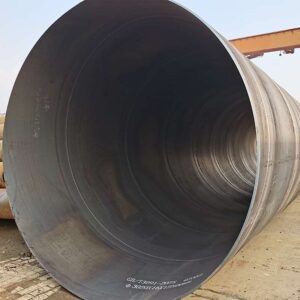
- Large pipes cannot be too thin: Industry standards generally require that the ratio of a pipe’s diameter to its wall thickness not exceed 130. For example, a large pipe with a diameter of 1.4 meters must have a wall thickness of at least 11 millimeters. If one insists on an 8-millimeter wall thickness, the steel strip will develop wrinkles and wavy edges as it is rolled and bent by the machine. Furthermore, once transported to the construction site, even a slight bump will cause the pipe to become elliptical, making it impossible to align and weld two pipes together.
- Small pipes cannot be made too thick: For standard small pipes with a diameter of 63 centimeters or less, the wall thickness generally does not exceed 16 millimeters. This is because steel plates that are too hard or too thick cannot be rolled by the machinery. If you absolutely need to purchase exceptionally thick or hard pipes, you’ll have to opt for straight-seam steel pipes or seamless steel pipes.
IV. The 5-Step Method for Selecting Pipes
To make it easier to remember, we’ve summarized the steps for buying pipes in the table below:
| Selection Step | What to Ask When Purchasing | Main Purpose |
|---|---|---|
| Step 1: Determine the Pipe Diameter | “How many tons of water does this project need to deliver per day?” | Estimate the required pipe outside diameter based on the required water flow. |
| Step 2: Ensure Pressure Resistance | “What is the maximum water pressure inside the pipe?” | Determine the basic wall thickness required to prevent the pipe from bursting under internal pressure. |
| Step 3: Check Resistance to External Loads | “How deep will the pipe be buried? Will heavy trucks pass over it?” | Determine whether additional wall thickness is needed to prevent the pipe from being crushed or deformed. |
| Step 4: Add a Safety Allowance | “How many years is the pipe expected to last? Is the water corrosive?” | Add approximately 1–2 mm of corrosion allowance to account for rust and wall loss, then determine the final wall thickness. |
| Step 5: Calculate the Overall Cost | “Is it better to use a thinner pipe made from higher-grade steel, or a thicker pipe made from lower-grade steel?” | Compare the total cost, including material, transportation, and welding considerations, and select the more cost-effective option. |
V. Selection Recommendations
- Selecting the diameter and wall thickness is, simply put, about striking a balance between safety and cost savings.
- Many veteran procurement professionals, fearing liability, habitually opt for thicker specifications—after all, it’s the boss’s money being spent. However, many large-scale projects now use computer software to perform “stress simulations.” This involves entering the pipe specifications, burial depth, and the types of vehicles that will pass over it into the computer, allowing the software to run the calculations.
- In many cases, these scientific calculations can help a project save 10% to 15% on steel costs while ensuring the pipes will last reliably for 50 years. For pipe purchases that often run into the hundreds of thousands or even millions, this represents tangible, pure profit.