In offshore engineering, port construction, and cross-sea transmission (water/oil/gas) projects, corrosion control is a key factor determining the success or failure of a project. The marine environment is characterized by high salinity, high humidity, and strong electrochemical activity, which places extremely demanding requirements on the anti-corrosion coatings of steel pipes.
Among the many industrial corrosion protection solutions, 3PE-coated spiral steel pipes are widely recognized as an extremely reliable choice. But how do they actually perform in extremely high-salinity environments? This article will provide an in-depth analysis from both a technical and practical perspective.
I. Corrosion Challenges in Marine and High-Salinity Environments
To assess the suitability of 3PE, it is first necessary to understand the four major threats that the marine environment poses to steel:
- Extremely high permeability of chloride ions (Cl⁻): High concentrations of chloride ions in seawater rapidly penetrate ordinary protective coatings, destroying the passivation film on the steel surface and causing severe pitting corrosion.
- Persistent electrochemical reaction conditions: High humidity and an abundant supply of oxygen keep the pipeline system constantly immersed in a massive “electrolytic cell,” accelerating the oxidation process.
- Mechanical scouring in the splash zone: In the intertidal zone, pipes face not only chemical corrosion but also periodic mechanical impact from waves.
- Microbial corrosion (MIC): The attachment of marine organisms and their metabolic byproducts alters the local pH of the pipeline, inducing rapid failure at the microscopic level.
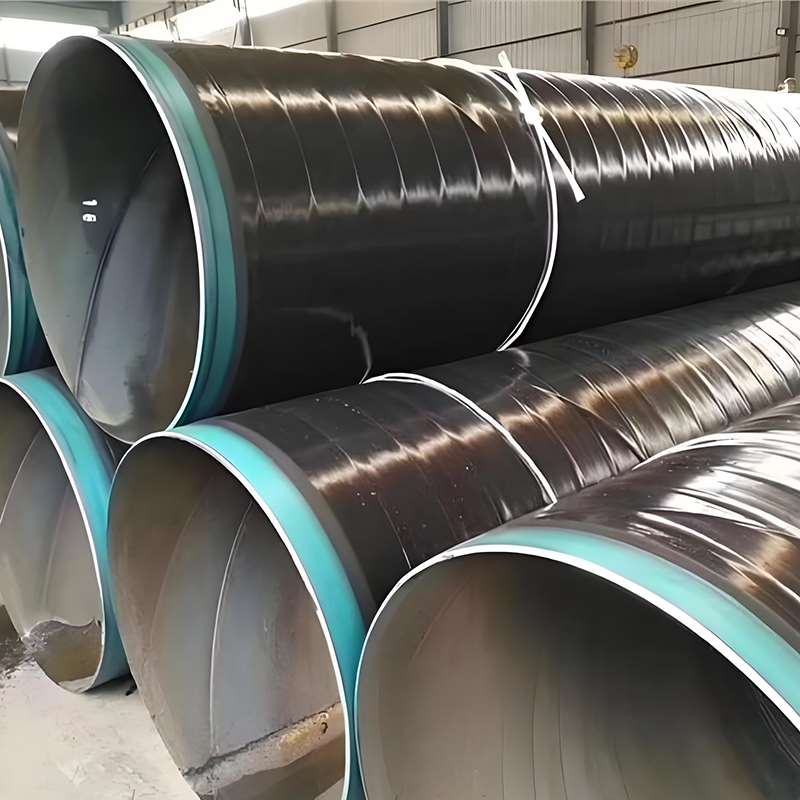
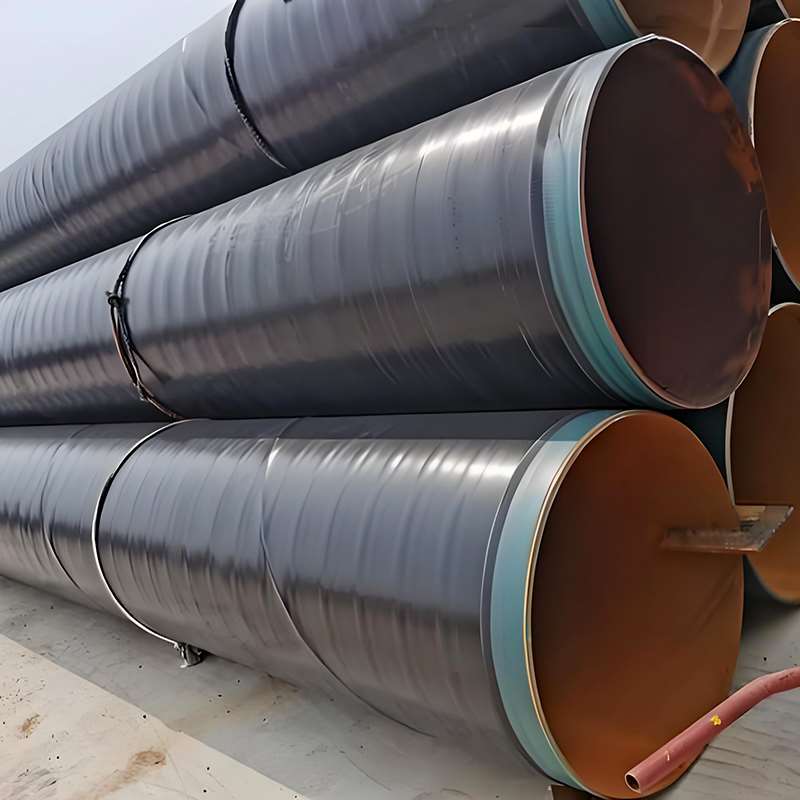
II. The “Synergistic Protection” Architecture of 3PE Coatings
The exceptional performance of 3PE coatings in marine environments stems from the systematic defense provided by their three-layer composite structure:
- Base Layer: Fusion-Bonded Epoxy (FBE)
- Function: Forms a strong physical and chemical bond with the surface of sandblasted steel pipes.
- Key Advantage: Provides excellent adhesion and resistance to cathodic delamination, preventing electrochemical corrosion at its source.
- Middle Layer: Copolymer Adhesive (AD)
- Function: Acts as an “adhesive bridge” between the polar epoxy layer and the non-polar polyethylene layer.
- Key Advantage: Ensures the overall integrity of the coating and prevents delamination of the three-layer structure under extreme temperature fluctuations or seawater pressure.
- Outer Layer: High-Density Polyethylene (PE)
- Function: Acts as a physical protective barrier.
- Key Advantage: With extremely low water absorption and exceptional impact resistance, it effectively blocks moisture, salt, and external mechanical damage.
III. Key Advantages of 3PE in High-Salinity Environments
As proven over the long term by numerous cross-sea projects worldwide, 3PE corrosion-resistant spiral-welded steel pipes exhibit the following characteristics:
- Excellent permeability resistance: The outer PE layer is virtually impervious to seawater, effectively preventing the diffusion of chloride ions.
- Extremely long service life: When installed according to standard procedures and combined with cathodic protection, their design life underwater typically ranges from 20 to 30 years.
- Excellent Resistance to Cathodic Peeling: Even when used in conjunction with a cathodic protection (CP) system, the FBE primer layer maintains extremely high stability and does not peel off due to electrical charges.
- Strong Environmental Adaptability: Capable of withstanding combined corrosion from high-salinity soil and seawater, making it particularly suitable for coastal and tidal flat areas.
IV. Key Limitations and Engineering Implementation Recommendations
Although 3PE offers robust performance, the following technical details must be considered in practical engineering applications:
- Field joint coating is critical: Corrosion protection at pipe joints (typically using heat-shrinkable tape) is the weakest point in the entire system and must be performed in strict accordance with international standards such as ISO 21809 to ensure that the joint coating quality matches that of the pipe body.
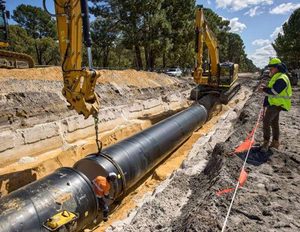
- Prevention of Mechanical Damage: During lifting and subsea pipe laying, the PE layer must be protected from damage. Deep scratches may lead to the formation of localized “corrosion cells.”
- Synergy with Cathodic Protection: In highly corrosive subsea environments, the 3PE coating should not be used in isolation; it must be combined with sacrificial anodes or impressed current cathodic protection.
- UV Protection: Since PE material is relatively sensitive to UV radiation, if steel pipes are stored outdoors at a dock or construction site for an extended period (more than 6 months), it is recommended to cover them to prevent aging.
V. Overview of Applicable Scenarios
- [Top Recommendations]: Subsea oil and gas pipelines, water supply pipelines for offshore platforms, steel pipe piles in ports, and cross-sea water diversion projects.
- [Requires Enhanced Design]: Ultra-deep-sea high-pressure environments (may require a thicker PE layer or the addition of a concrete ballast layer), and exposed pipelines subject to severe scouring without buried protection.