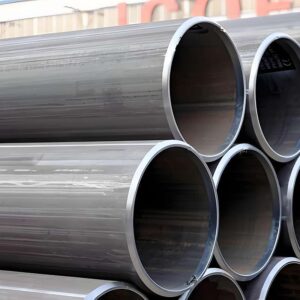
Spiral Steel Pipe Manufacturer
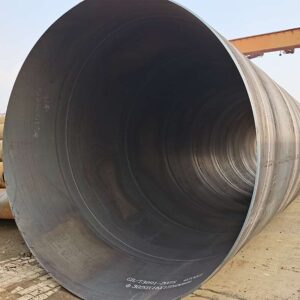
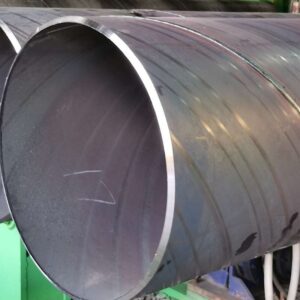
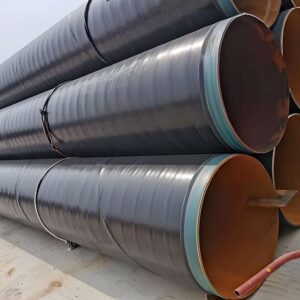
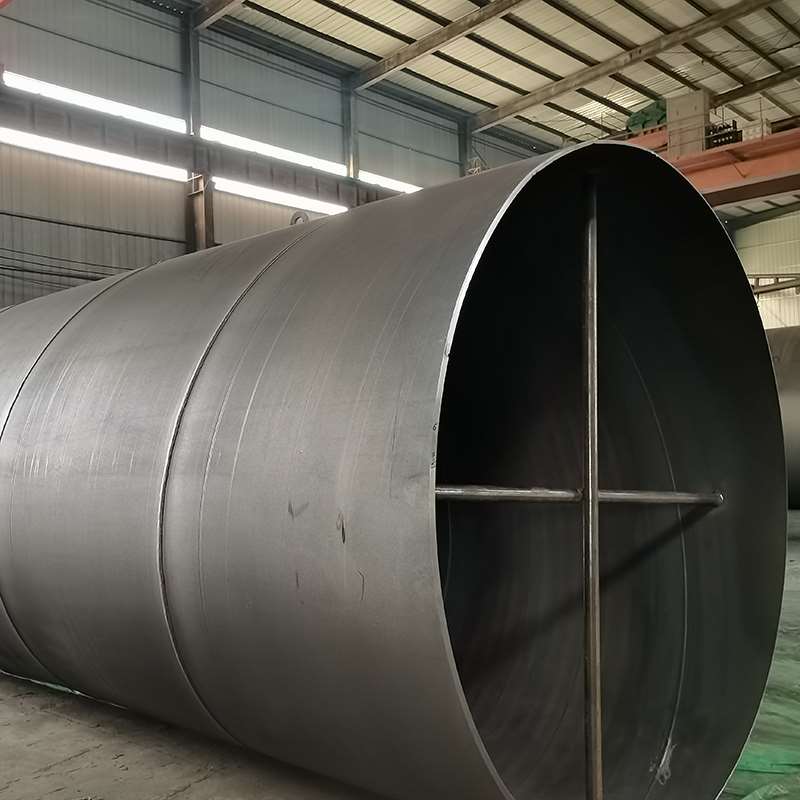
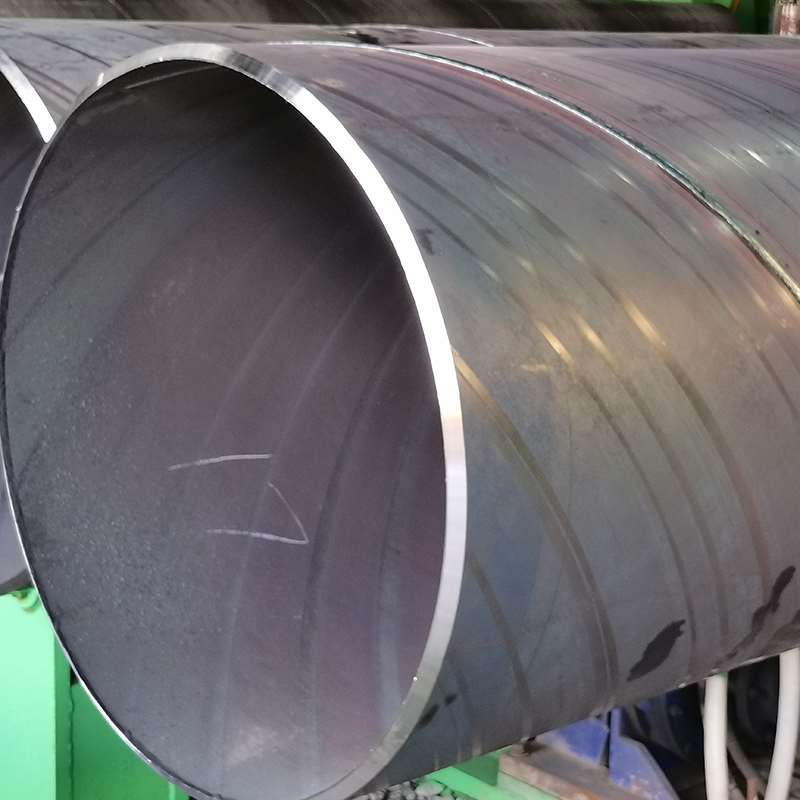
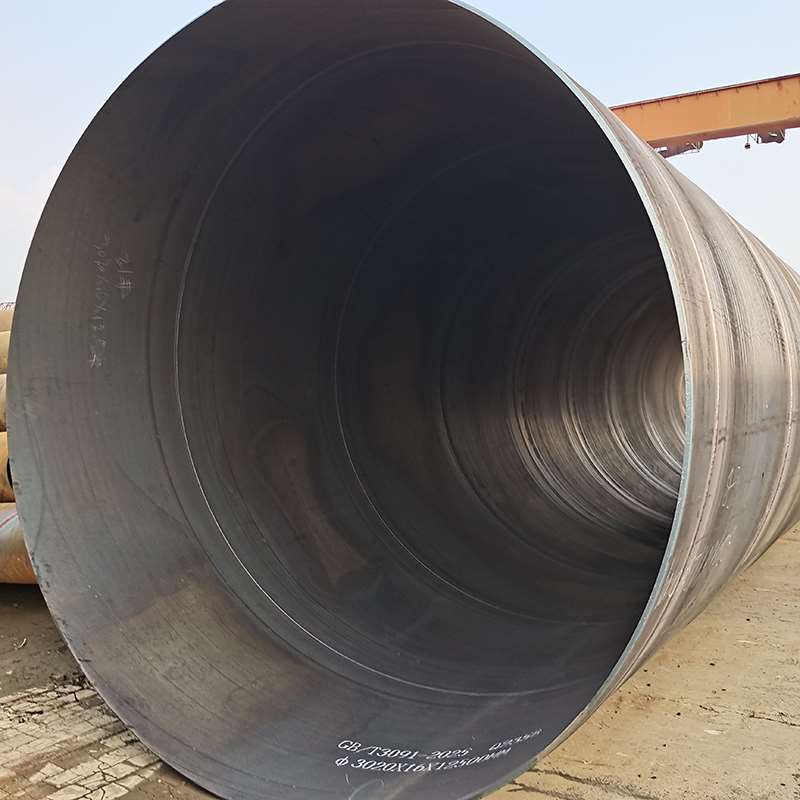
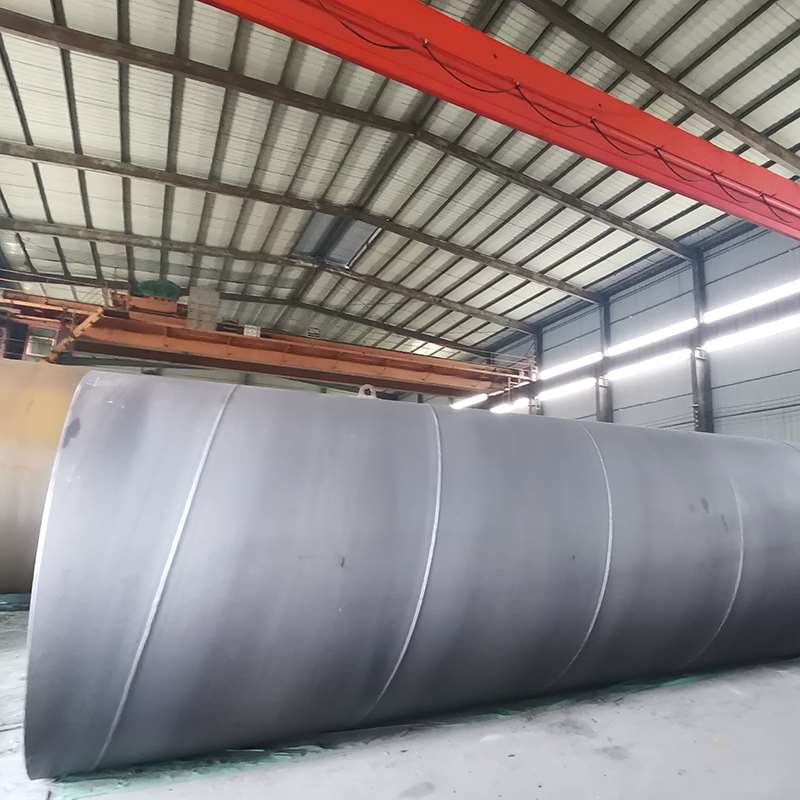
Large Diameter Spiral Steel Pipe
OD :
219–3620 mm
WT :
5–25 mm
Length :
6–12 m, customizable
Grade :
Q235B, Q355B, API 5L Grade B, X42, X52, X60, X65
Standard :
GB/T 3091, GB/T 9711, SY/T 5037
End Type :
Plain Ends, Beveled Ends
Connection :
Welding
Introduction :
Large diameter spiral steel pipes are manufactured using the SSAW process and are suitable for water supply, drainage, piling, and infrastructure projects, with customizable diameters, wall thicknesses, lengths, and anti-corrosion coatings.
Product Details
I. Introduction to Large-Diameter Spiral-Welded Steel Pipes
Large-diameter spiral-welded steel pipes are welded steel pipes produced by continuously forming steel coils and welding them along a spiral seam; they are also known as SSAW steel pipes.
Compared to small-diameter steel pipes, large-diameter spiral-welded steel pipes can accommodate a wider range of outer diameters and are therefore widely used in large-scale water transmission pipelines, drainage projects, pile foundation projects, docks, and other infrastructure projects.
II. Specifications for Large-Diameter Spiral-Welded Steel Pipes
|
Item |
Available Specifications / Options |
|---|---|
|
Manufacturing Process |
SSAW (Spiral Submerged Arc Welding) |
|
Outside Diameter |
Approx. DN200–DN3600 mm |
|
Wall Thickness |
Approx. 5–25 mm |
|
Length |
Typically 5.8–12 m; customizable to project requirements |
|
Steel Grade |
Q235B, Q355B, API 5L Grade B, X42, X52, X60, X65, etc. |
|
Pipe Ends |
Plain ends, beveled ends, etc. |
|
Anti-Corrosion Coating |
3PE, FBE, TPEP, etc. |
|
Standards |
Selected according to project requirements |
III. Production Process for Large-Diameter SSAW Steel Pipes
Large-diameter spiral-welded steel pipes are typically manufactured using steel coils as raw material through continuous spiral forming and submerged arc welding.
The main production steps include:
Steel coil preparation → Uncoiling and leveling → Spiral forming → Internal and external submerged arc welding → Cutting to length → Pipe end processing → Inspection → Anti-corrosion coating → Final inspection
IV. Steel Grades and Applicable Standards
| Standard | Available Steel Grades |
| GB/T 3091-2025 | Q195, Q215A/B, Q235A/B, Q275A/B, Q355B |
| GB/T 9711-2017 | L245/B, L290/X42, L320/X46, L360/X52, L390/X56, L415/X60, L450/X65, L485/X70 and other PSL grades |
| SY/T 5037-2023 | According to project requirements |
| API 5L | Grade B, X42, X46, X52, X56, X60, X65, X70 and other grades |
| ISO 3183 | According to project requirements |
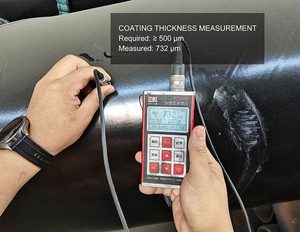
V. Anti-Corrosion Coatings for Large-Diameter Spiral-Welded Steel Pipes
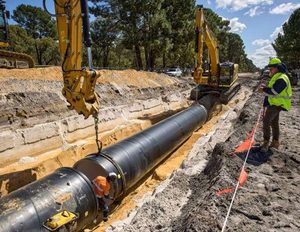
Large-diameter spiral-welded steel pipes are frequently used in water supply, drainage, oil and gas transmission, and infrastructure projects, where they are often buried underground for extended periods or exposed to humid environments. Prolonged contact with moisture, soil, or salt can cause surface corrosion; therefore, anti-corrosion coatings are a critical measure for protecting pipelines in many projects.
Corrosion protection solutions should be selected based on the pipeline’s operating environment and the transported medium, rather than simply assuming that a single type of coating is suitable for all projects. For large-diameter steel pipes, procurement typically requires simultaneous consideration of external corrosion, internal media, mechanical damage, as well as construction and transportation conditions.
Common Corrosion Protection Solutions
|
Coating Type |
Key Features |
Typical Applications |
|---|---|---|
|
3PE |
Three-layer polyethylene coating system offering excellent resistance to water and soil corrosion, along with good mechanical protection. |
Buried water, oil and gas pipelines, and long-distance pipeline projects. |
|
FBE |
Fusion-bonded epoxy coating with strong adhesion to steel, forming a continuous protective layer against corrosion. |
Water pipelines, buried pipelines, and industrial piping systems. |
|
TPEP |
Provides corrosion protection for both the internal and external surfaces of steel pipes, depending on project requirements. |
Water supply, drainage, and projects requiring both internal and external corrosion protection. |
|
Other Coatings |
Selected according to the conveyed medium, operating temperature, and corrosive environment. |
Specialized industrial and engineering projects. |
VI. Applications of Large-Diameter Spiral-Welded Steel Pipes in Water Supply Projects
Large-diameter spiral-welded steel pipes (SSAW) are widely used in large-scale water supply and water conveyance projects, and are particularly suitable for long-distance pipeline systems that require the conveyance of large volumes of water. Based on the project’s design flow rate and pressure requirements, appropriate pipe diameters, wall thicknesses, steel grades, and corrosion protection systems can be selected to meet various engineering conditions.
In water supply projects, large-diameter steel pipes are commonly used for:
- Municipal Water Supply: Main municipal water transmission pipelines and regional water supply systems
- Raw Water Transmission: Water transmission pipelines from water sources, reservoirs, or intake facilities to water treatment plants
- Industrial Water Supply: Process water and recirculating water systems for power plants, steel mills, and other industrial facilities
- Agricultural Irrigation: Large-scale farmland irrigation and water conveyance projects
- Long-Distance Water Transmission: Cross-regional, high-flow-rate water transmission pipelines
- Underground Water Supply: Water supply pipelines installed for long-term underground use
VII. FAQs on Large-Diameter Spiral-Welded Steel Pipes
Question 1. How much pressure can large-diameter spiral-welded steel pipes withstand?
Answer:Pressure-bearing capacity primarily depends on the pipe diameter, wall thickness, steel grade, and design standards. For the same pipe diameter and steel grade, the greater the wall thickness, the higher the theoretical pressure-bearing capacity is typically. The actual allowable working pressure must also take into account design factors, welds, corrosion allowance, and operating conditions, and must be calculated in accordance with the relevant standards.
Question 2. How long is the service life of large-diameter spiral-welded steel pipes?
Answer:There is no fixed service life; it primarily depends on the quality of the steel pipe, the corrosion protection system, the transported medium, and the operating environment. By appropriately selecting wall thickness and internal and external corrosion protection, and ensuring proper transportation, installation, and operational maintenance, the design life requirements of various projects can be met.
Question 3. Are large-diameter spiral welded steel pipes suitable for drinking water conveyance?
Answer:Yes, but it is necessary to select an appropriate internal anti-corrosion coating or lining based on the requirements of the drinking water project and to confirm that the materials comply with relevant requirements for contact with drinking water. When purchasing, the water quality, type of internal coating, thickness, and relevant standards should be clearly specified.
Question 4. What wall thickness should be selected for large-diameter spiral welded steel pipes?
Answer:Wall thickness should be determined based on design pressure, pipe diameter, steel grade, burial depth, external loads, and installation conditions—rather than solely on pipe diameter. It is recommended to perform calculations based on project design parameters and applicable standards.
Question 5. Which anti-corrosion coating should be selected for large-diameter spiral welded steel pipes?
Answer:The choice should be based on the operating environment. 3PE is commonly used for external anti-corrosion in buried applications; FBE can be used for both internal and external anti-corrosion; and TPEP can be used for both internal and external anti-corrosion. The specific selection should be determined based on the medium, soil conditions, temperature, and project standards.
Question 6. What is the difference between large-diameter spiral-welded steel pipes and LSAW steel pipes?
Answer:SSAW pipes are manufactured using spiral welding, while LSAW pipes are manufactured using longitudinal seam welding. Both can be used in large-diameter projects; the actual choice should be based on pipe diameter, wall thickness, pressure, standards, inspection requirements, transportation, and overall cost.
Related Products